
Next in: Superfandoms
You can’t algorithm your way into loyalty.


TikTok promised global scale. But the “you just have to go viral once” logic was only a rumor, an attention bubble, inflated by the platform’s astronomical growth.
The truth is, you can’t algorithm your way into loyalty.
Great social numbers don’t always translate into engagement or emotional commitment. While TikTok lets them scale their reach overnight, it‘s light on substance or answers. Who is the creator? What’s behind the music? Who knows? Who cares?
Waking up from the dream of overnight success, the industry is going back to basics, and one of those basics is the superfan.
Superfans aren’t just a nice-to-have segment for merch sales; they’re an entire distribution system for artists’ cultural influence.
The post-2020 generation of celebrities is heading back in time. Battered and bruised by the era of hyper-attention, they’re rejecting the infinite scroll in favor of the finite circle.
Addison Rae hosts fan ceremonies
Lizzo reintroduces gatekeeping into fandom culture, and
LaRussell swaps stadium concerts for backyard hangouts with fans.
How will these three signals to evolve into trends?
Fan Ceremonies
By performing fan ceremonies, Addison Rae converts her TikTok followers into a music audience.

What’s Happening
Tibetan singing bowls hum. Fans breathe in, eyes closed, focused on Addison’s chant. Fans breathe out. A silver bell chimes.
It’s not a meet-and-greet or a photo op. It’s a ceremony.
After years of trying to be taken seriously, one of TikTok’s originals is now a real musician, selling out every show. Before each performance, Addison Rae invites fans for a $500 sound bath, guiding them into their own private headspace, where only breath, the bowls, and her voice can reach.
What it means
Visuals can be powerful, but physical rituals create immovable memory. The fan doesn’t just remember the concert. They remember being chosen, breathing in sync, the singing bowl reverberating through the floor. That memory has texture. It has weight. That memory will stick.
What’s next
Before social media appropriated the term, “following” had religious and spiritual connotations. Addison Rae is focused on what it means to have a real following. She’s borrowing timeless rituals with clear intent, and as she does so, she turns following into devotion.
Read the post that inspired this signal here.
Hierarchies, Gatekeeping, and Feeling Special
Curving online spaces for her superfandom, Lizzo builds fandom hierarchies.
What’s happening
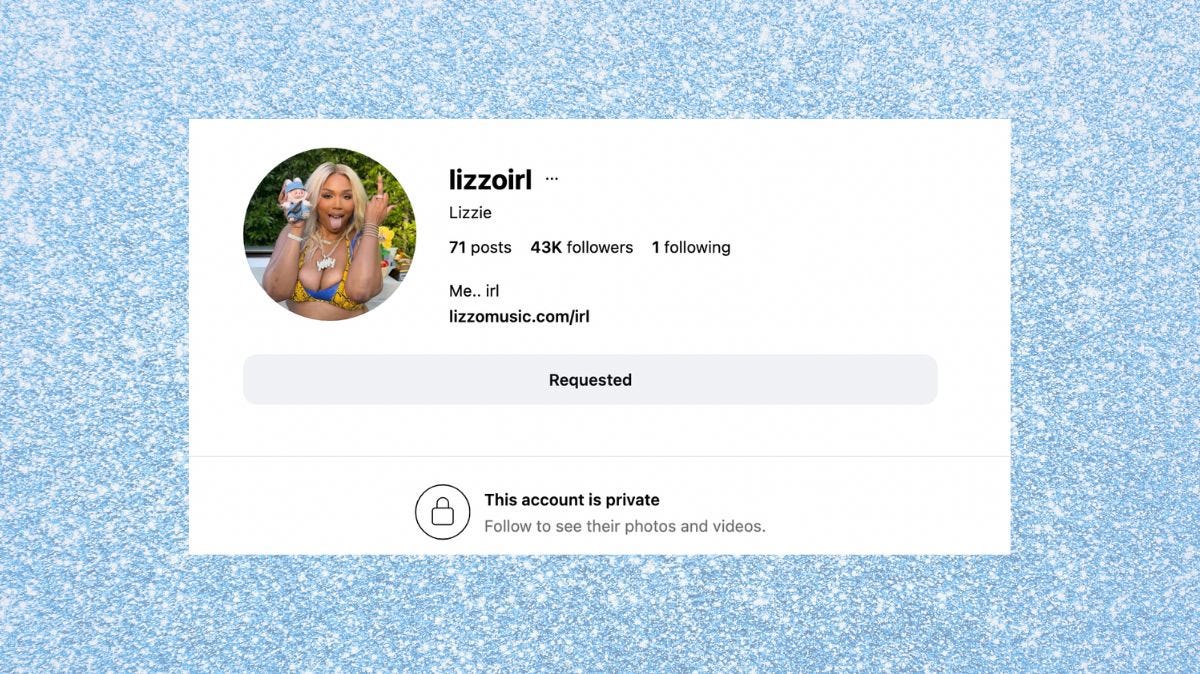
A private Instagram, an elite group of superfans, and backstage stories? Welcome to Lizzo’s world. After nearly a year in quiet retreat, she returns with a new album and a new message for fans: join my private Lizzbians community.
These die-hard followers are more than casual listeners—they’re insiders.
Numbers are not enough anymore. Even millions of followers don’t grab the algorithm’s full attention. (Lizzo has 26M followers on TikTok and 11.6M on Instagram). In response, she’s has drawn a tight circle around her nearest and dearest. On her lizzoirl Instagram account (43K followers), she shares backstage stories, exclusive updates, and rare glimpses into her world with a hand-picked audience. Here, fans aren’t just viewers. They are participants in a special space that rewards engagement, loyalty, and attention.
Why it matters
Fan hierarchies partly solve the problem of scalability. They create rewards for those who care. When you speak to millions, you’re really speaking to no one. But when you speak to a thousand people who really want to be there, they listen. They are seen. They are chosen. They feel, in a small way, superior. And so they advocate harder, louder, and longer.
What’s next
After a few years of treating gatekeeping as a bad word, we’re circling back to its function. Social hierarchies work because they mirror how people actually connect. No one is built to talk to ten thousand people at once. No one has 10,000 friends.
Read the post that inspired this signal here.
Unstructured Fan
Rapper LaRussell creates superfandom by making fans part of the experience
What’s happening
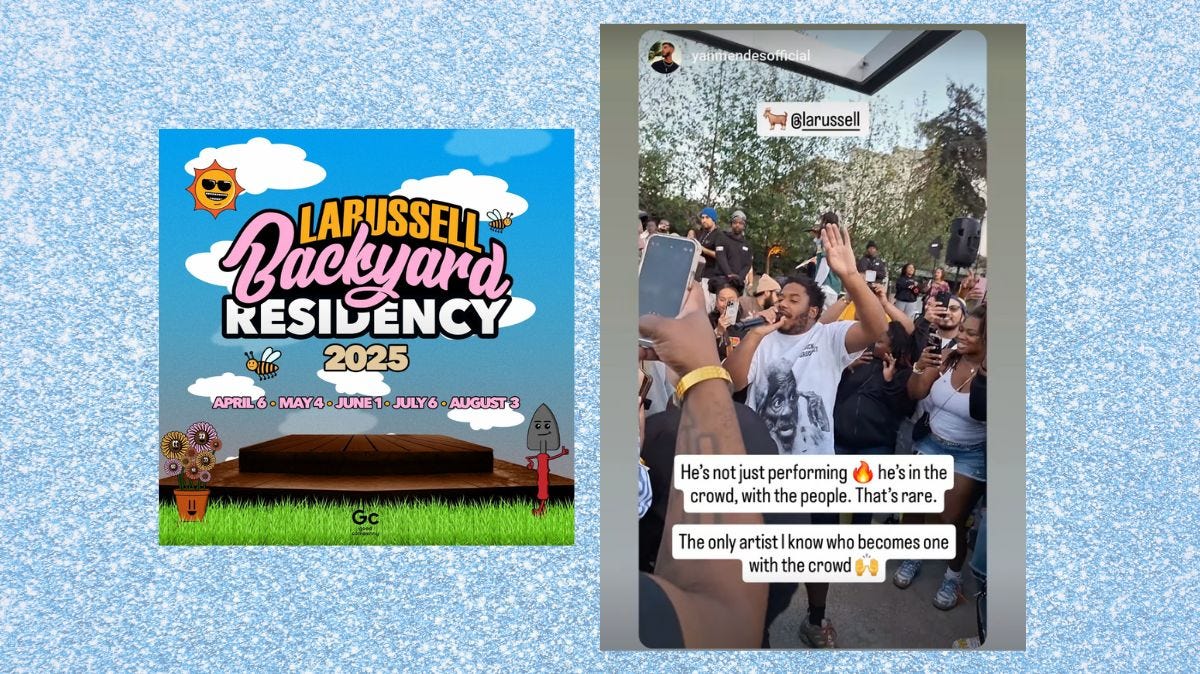
Fans wander into a backyard without knowing what’s coming. And that’s exactly the point. Rapper LaRussell began small, in outdoor spaces and on local blocks, with DIY setups and an informal energy. But the goal was never just “watch a star perform.” The invitation was, “come be part of the session.”
Fans arrive without knowing exactly what will unfold. Sometimes there’s a performance; sometimes he simply hangs out. Other artists might drop in. The event itself is secondary. Participation is primary.
By weaving fans into both the artist’s world and each other’s moments, LaRussell creates community. Fans feel part of something authentic, an experience they help shape, rather than a show they merely observe.
What It Means
The fan isn’t in the audience; they’re in the experience. They are not there to see something, but to be part of that same something. They’re not watching a show; they’re a block party hanging out with the artist just because. It is fun. Creating a fun environment for other people makes us feel good.
What’s next
The future of live events is unstructured, participatory experiences. Instead of expensive tickets and rigid formats, invite fans to experiment, contribute, and enjoy alongside the artist. By blurring the line between performance and play, creators like LaRussell turn gatherings into living communities: dynamic, memorable, and unpredictable.
Read the article that inspired this signal here.
Thank you for reading!
xx